Checklist for Inspecting Explosion-Proof Cranes
menu_open
Content Quick Link
Checklist for Inspecting Hazardous Environment Explosion-Proof Cranes Before Purchase
Provide buyers with actionable guidance to ensure that explosion-proof cranes meet safety, operational, and compliance requirements before purchase.
Introduction
Hazardous environment cranes are specialized lifting machines designed to operate safely in areas where flammable gases, vapors, dust, or chemicals are present. You'll find these cranes in chemical plants, oil and gas refineries, mining facilities, and even in food processing plants where dust accumulation can pose a risk. Unlike standard overhead cranes, these machines must meet strict safety standards to prevent sparks, explosions, or other hazardous incidents.
Before purchasing an explosion-proof crane, a thorough pre-purchase inspection is essential. Many buyers focus only on lifting capacity or price, but skipping a detailed inspection can lead to serious safety issues, unexpected downtime, or expensive retrofits.
Selecting the wrong crane isn't just a safety problem—it can also hurt your bottom line. A crane that isn't properly certified or suited for the environment may require frequent repairs, fail inspections, or even stop your production line. Taking the time to check every aspect of the crane before signing the purchase order helps avoid these financial and operational risks.
Key points to remember:
- Hazardous environment cranes operate in flammable or combustible conditions.
- Pre-purchase inspection ensures compliance, safety, and reliability.
- Incorrect crane selection can lead to costly downtime, repairs, and regulatory issues.
Certifications and Compliance
One of the first things any buyer should verify is whether the crane meets recognized explosion-proof and industrial standards. Certifications are not just paperwork—they are proof that the crane has been tested and approved for the conditions it will face.
Explosion-proof certifications
Cranes for hazardous areas must have recognized certifications such as:
- ATEX – European certification for explosive atmospheres.
- IECEx – International standard for electrical equipment in explosive atmospheres.
- FM and UL – Commonly used in North America for fire and explosion safety.
These certifications indicate that the crane's electrical and mechanical components are designed to prevent sparks, overheating, or any ignition sources. Always confirm that the specific crane model has certification for your zone classification (Zone 1, Zone 2, Zone 21, or Zone 22).
Electrical and mechanical standards
Beyond explosion-proof ratings, industrial cranes should meet general safety and mechanical standards:
- ISO standards – Ensure structural integrity, design safety, and lifting performance.
- CE marking – Confirms compliance with European health, safety, and environmental requirements.
- National standards – Depending on your country, local industrial crane regulations may apply.
Verifying these standards helps ensure that the crane can handle operational loads and environmental stresses without compromising safety.
Documentation to request
When discussing a potential purchase, make sure to ask for complete documentation:
- Test certificates for explosion-proof motors and electrical components.
- Conformity statements from the manufacturer confirming compliance with standards.
- Inspection reports showing the crane has passed factory and third-party evaluations.
Having these documents on hand not only protects your team but also makes regulatory inspections and insurance approvals much smoother.
Structural and Protective Coatings
When inspecting a hazardous environment crane, the structural integrity and protective coatings are just as important as the electrical components. Even a well-certified crane can fail prematurely if the frame, girders, or protective finishes are not properly built for harsh conditions.
Crane frame and girder integrity
Start by looking at the basics: the crane's frame and girders. Ask about the material grade—most cranes for hazardous areas are made from high-strength steel with proper heat treatment. The welding quality is equally important; uneven or incomplete welds can become weak points, especially under heavy loads or in high-vibration environments.
Also, make sure the design is suitable for your specific hazardous conditions. For example, cranes in chemical plants may require extra reinforcements to handle corrosive fumes, while cranes in outdoor saltwater environments need materials that resist rust and degradation.
Inspection points:
- Confirm material grade meets manufacturer specifications.
- Check welds for consistency, penetration, and absence of cracks.
- Assess design suitability for the specific hazard zone and environment.
Anti-corrosion coatings
Protective coatings are your crane's first defense against rust, chemical exposure, and moisture. Depending on the application, cranes may use epoxy, polyurethane, or specialized chemical-resistant coatings. Ask the supplier for technical sheets detailing which coating is used and its expected lifespan in your environment.
Even small scratches or uncoated areas can lead to corrosion over time, so a thorough visual inspection is critical. Make sure the coatings cover all exposed surfaces, including underside beams and corners, where chemicals or water might accumulate.
Inspection points:
- Confirm coating type and chemical resistance.
- Check coverage of all structural surfaces, especially hidden areas.
- Look for any visible defects, bubbles, or peeling.
Paint and surface finish
Finally, verify the paint and surface finish, which often serves as both corrosion protection and part of the explosion-proof design. Explosion-proof paints are typically thicker and may include additives to prevent sparks. Confirm the thickness and adhesion of the paint using manufacturer specifications or field testing if possible.
Even minor paint defects can compromise safety in hazardous areas. Make sure the crane's surface finish is uniform, free from cracks, and properly cured.
Inspection points:
- Verify paint type matches explosion-proof and anti-corrosion requirements.
- Check thickness and uniformity across all surfaces.
- Look for cracks, chips, or peeling that could expose bare metal.
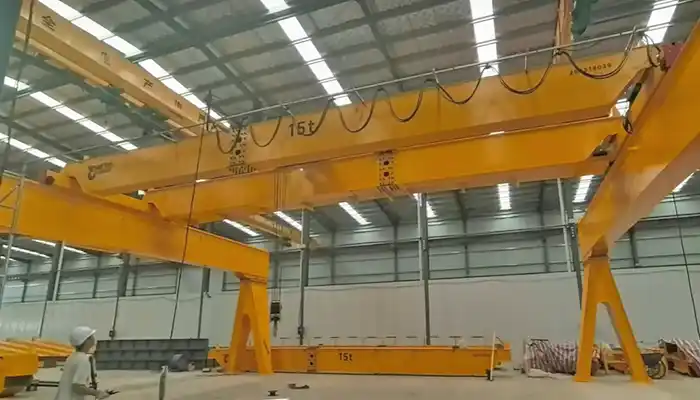
Explosion proof overhead crane for sale, Tailored explosion proof bridge overhead cranes 15 ton for your needs
Explosion-Proof Components
Explosion-proof cranes rely heavily on their specialized components to operate safely in hazardous environments. These components are designed to prevent sparks, overheating, or other ignition sources, and a careful inspection is critical before making a purchase. Skipping this step can result in unsafe equipment or unexpected downtime.
Motors and hoists
The heart of any crane is its motor and hoist system. For hazardous areas, these components must have flameproof (Ex d) or increased safety (Ex e) ratings. This means they are engineered to contain any sparks internally or prevent sparks from occurring in the first place.
When inspecting, ask for:
- Certification documents for explosion-proof ratings.
- Details on maximum load capacities and duty cycles.
- Evidence of factory testing in hazardous conditions.
Make sure the motor and hoist are suitable for your environment—whether it's flammable gas, dust, or a combination—and that the load ratings include a safety margin.
Electrical enclosures and wiring
Electrical systems are a common source of ignition in hazardous environments, so enclosure and wiring quality matters. Look for:
- Properly sealed enclosures with IP (Ingress Protection) ratings suitable for dust or moisture exposure.
- Explosion-proof junction boxes and terminal fittings.
- Wiring that meets intrinsic safety requirements, with anti-sparking and abrasion-resistant insulation.
Check that cables are routed safely, and all junctions are tight and sealed. Even small gaps can create hazards over time.
Control systems
The crane's control system should be fully certified for use in hazardous areas. Verify that:
- All components are intrinsically safe (Ex i) or meet relevant flameproof standards.
- Fail-safes and redundancies are in place for critical operations like hoist stop, trolley stop, and emergency lowering.
- Control units are compatible with your operator interface and environmental conditions.
A well-designed control system prevents accidental energizing and ensures smooth operation even under challenging conditions.
Emergency stop and limit switches
Safety devices like emergency stops and limit switches are critical for avoiding accidents or overload situations. For hazardous areas, they must be:
- Explosion-proof and certified for the relevant zone.
- Tested and functional before delivery.
- Easily accessible for operators, with clear labeling and intuitive placement.
Ensure these devices are not aftermarket add-ons—they should be integrated and certified as part of the crane system.
Inspection takeaways
- Always request certification documents for motors, hoists, and electrical components.
- Verify IP ratings and explosion-proof measures for wiring and enclosures.
- Confirm that control systems and safety devices are certified, functional, and accessible.
- Test or review factory inspection reports when possible.
This section ensures buyers know exactly what to check to prevent under-spec or unsafe cranes. Keywords naturally included for SEO: explosion-proof crane, hazardous environment crane, flameproof motor, intrinsically safe controls, emergency stop.
Operator Interface and Controls
The operator interface is where safety, efficiency, and usability come together. Even if a crane has top-rated explosion-proof components, poor control design can lead to accidents or slow operations. Inspecting the operator interface before purchase is critical for both safety and productivity.
Control types
Explosion-proof cranes offer several control options, each suited to different working environments:
- Pendant controls – Handheld, cable-connected devices ideal for precise positioning in small to medium workshops.
- Cabin controls – Enclosed operator cabins provide comfort and visibility for large cranes or outdoor operations.
- Remote controls – Wireless options for flexibility, especially in hazardous or hard-to-reach areas.
When inspecting, confirm that all control devices are certified for the specific hazardous zone and are tested for sparks, moisture, and dust exposure.
Ergonomics and usability
A control system is only effective if operators can use it safely and efficiently. Check for:
- Intuitive interface – Controls should be easy to understand without excessive training.
- Clear indicators – Visual and audible signals for overloads, speed limits, or positional warnings.
- Proper labeling – Buttons and levers should be clearly marked for their function, reducing human error.
Ergonomic controls reduce operator fatigue and help maintain consistent safety standards during long shifts.
Safety features
Modern cranes integrate multiple safety features to prevent accidents and equipment damage. When reviewing a crane, ensure it includes:
- Anti-collision devices – Prevents crane or trolley from hitting walls, other cranes, or equipment.
- Overload protection – Stops lifting beyond rated capacity to prevent structural or mechanical failure.
- Warning alarms – Audible and visual alerts to warn operators and nearby personnel of movements or hazardous conditions.
Ask the manufacturer for documentation showing that these safety features are tested and compliant with explosion-proof standards.
Inspection takeaways
- Verify control type suitability and explosion-proof certification.
- Assess ergonomics, indicators, and labeling for practical usability.
- Confirm the presence and testing of safety features like overload protection and anti-collision devices.
This section ensures buyers understand the practical inspection points for crane controls while keeping the content natural and SEO-friendly, using terms like hazardous environment crane, explosion-proof crane controls, pendant control, cabin control, crane safety features.
Mechanical and Operational Checks
Even the best-certified explosion-proof crane can perform poorly if its mechanical systems aren't properly inspected. Buyers should pay close attention to lifting, movement, and operational characteristics to ensure the crane will be reliable and safe in daily use.
Lifting and load handling
Start with the basics: lifting capacity and load handling. Verify that the crane's rated capacity matches your operational requirements. Ask for load test certificates from the manufacturer or third-party testing authorities. These documents show that the crane has been tested to handle its rated load plus a safety margin, usually 10–20%.
Also, consider your typical load types: irregular shapes, bundled items, or uneven weights may affect lifting performance. Make sure the crane's hoist and trolley systems can handle these conditions without strain.
Inspection points:
- Check rated load against expected operational loads.
- Review factory or third-party test certificates.
- Confirm safety margin is included in capacity.
Hoist and trolley movement
Smooth, reliable movement is critical for efficiency and safety. Inspect the hoist and trolley:
- Ensure the hoist moves without jerking, and brakes engage properly.
- Test limit switches to confirm they stop the trolley and hoist at safe positions.
- Look for consistent performance at different speeds and load conditions.
A crane that jerks, stalls, or fails to stop accurately can cause accidents or damage materials and structures.
Noise and vibration
Excessive noise or vibration isn't just uncomfortable—it can be a sign of mechanical wear or imbalance. Check that:
- Noise levels are within acceptable ranges for your facility.
- Vibrations are minimal during lifting and trolley movements.
- Bearings, wheels, and hoist drums are properly lubricated and aligned.
Comfortable, low-vibration operation improves operator safety, reduces fatigue, and extends the lifespan of the crane.
Inspection takeaways
- Verify lifting capacity, load handling, and test certificates.
- Check hoist and trolley movement for smooth operation and functional limit switches.
- Assess noise and vibration levels for safe and comfortable operation.
This section provides practical guidance for buyers to inspect the mechanical and operational performance of explosion-proof cranes. Keywords included naturally: hazardous environment crane, explosion-proof crane, load handling, hoist movement, limit switches, crane vibration.
Maintenance and Serviceability
Maintenance is often overlooked during the purchase stage, but it plays a crucial role in the long-term safety and reliability of hazardous environment cranes. A crane that is difficult to maintain or lacks certified spare parts can lead to extended downtime and higher operational costs.
Accessibility
Before buying, check how easily maintenance personnel can access both electrical and mechanical components. Look for:
- Clearly marked inspection points for motors, hoists, and control panels.
- Removable panels or doors for electrical enclosures that do not compromise explosion-proof integrity.
- Adequate space around girders, wheels, and hoists for routine inspections and minor repairs.
Good accessibility reduces maintenance time, prevents mistakes, and ensures that inspections can be conducted safely without dismantling major sections of the crane.
Replacement parts
A crane is only as reliable as the availability of its spare components. Ask the supplier about:
- Certified replacement parts for motors, brakes, limit switches, and control devices.
- Lead times for delivery, especially for explosion-proof components.
- Whether parts are standardized or proprietary, which affects ease of replacement in the future.
Ensuring that replacement parts are available and certified for hazardous environments helps avoid unplanned downtime and compliance issues.
Long-term reliability
Consider the expected lifespan and service intervals for all critical components:
- Lubrication schedules for hoist drums, bearings, and wheels.
- Frequency of electrical inspections for explosion-proof enclosures and control circuits.
- Environmental considerations, such as corrosion or chemical exposure, which may shorten component life.
Understanding these requirements upfront allows buyers to plan preventive maintenance, reducing the risk of failures and extending the crane's operational life.
Inspection takeaways
- Confirm accessibility for safe and efficient inspections.
- Ensure replacement parts are certified and readily available.
- Review service intervals, lubrication needs, and environmental impact on lifespan.
This section gives buyers practical guidance to evaluate maintenance and serviceability before purchasing an explosion-proof crane. SEO-friendly keywords naturally included: hazardous environment crane, explosion-proof crane maintenance, crane spare parts, long-term crane reliability, serviceability.
Practical Pre-Purchase Checklist
To make the inspection process easier, buyers can use a consolidated checklist covering all critical areas of a hazardous environment crane. This table allows for quick verification with Yes/No or Pass/Fail responses, ensuring nothing is overlooked before purchase.
Pre-Purchase Inspection Checklist for Explosion-Proof Cranes
| Section | Inspection Point | Pass/Fail or Yes/No | Notes / Comments |
|---|---|---|---|
| Certifications | ATEX, IECEx, FM, UL certifications present | ||
| Electrical & mechanical standards verified (ISO, CE, national standards) | |||
| Test certificates, conformity statements, inspection reports received | |||
| Structural & Protective Coatings | Frame & girder material grade and weld quality | ||
| Anti-corrosion coating type and coverage | |||
| Paint thickness and adhesion verified | |||
| Explosion-Proof Components | Motors & hoists rated flameproof or increased safety | ||
| Electrical enclosures and wiring properly sealed, IP rated | |||
| Control systems intrinsically safe with fail-safes | |||
| Emergency stop & limit switches explosion-proof and accessible | |||
| Operator Interface & Controls | Control type suitable for environment (pendant, cabin, remote) | ||
| Ergonomic design with clear indicators & labeling | |||
| Safety features present (anti-collision, overload, alarms) | |||
| Mechanical & Operational Checks | Lifting capacity verified with test certificates | ||
| Hoist & trolley movement smooth; brakes and limit switches functional | |||
| Noise and vibration within safe, acceptable levels | |||
| Maintenance & Serviceability | Inspection points accessible for electrical/mechanical components | ||
| Replacement parts available and certified | |||
| Service intervals, lubrication, and lifespan suitable for environment |
This checklist can be printed or used digitally during factory inspections or supplier visits, helping buyers systematically verify that the crane meets operational, safety, and regulatory requirements.
Conclusion
A thorough pre-purchase inspection of hazardous environment cranes is not optional—it's essential. Skipping these checks can compromise safety, lead to regulatory issues, and increase operational costs.
Consulting with certified suppliers and engineering experts can provide additional guidance on zone classifications, component suitability, and long-term reliability. Their input ensures that you select a crane designed for your specific hazardous conditions.
The dual benefit is clear: a properly inspected and certified crane keeps your team safe while protecting your investment with long-term operational reliability. Taking the time to inspect thoroughly before purchase saves money, prevents downtime, and ensures your operations run smoothly for years to come.

Article by Bella ,who has been in the hoist and crane field since 2016. Bella provides overhead crane & gantry crane consultation services for clients who need a customized overhead travelling crane solution.Contact her to get free consultation.